Me and Bobby McGee by Janis Joplin
Janis Joplin's recording of Me and Bobby McGee, written by Kris Kristofferson and Fred Foster, reached number one on the Billboard Hot 100 in March 1971, more than five months after her death.
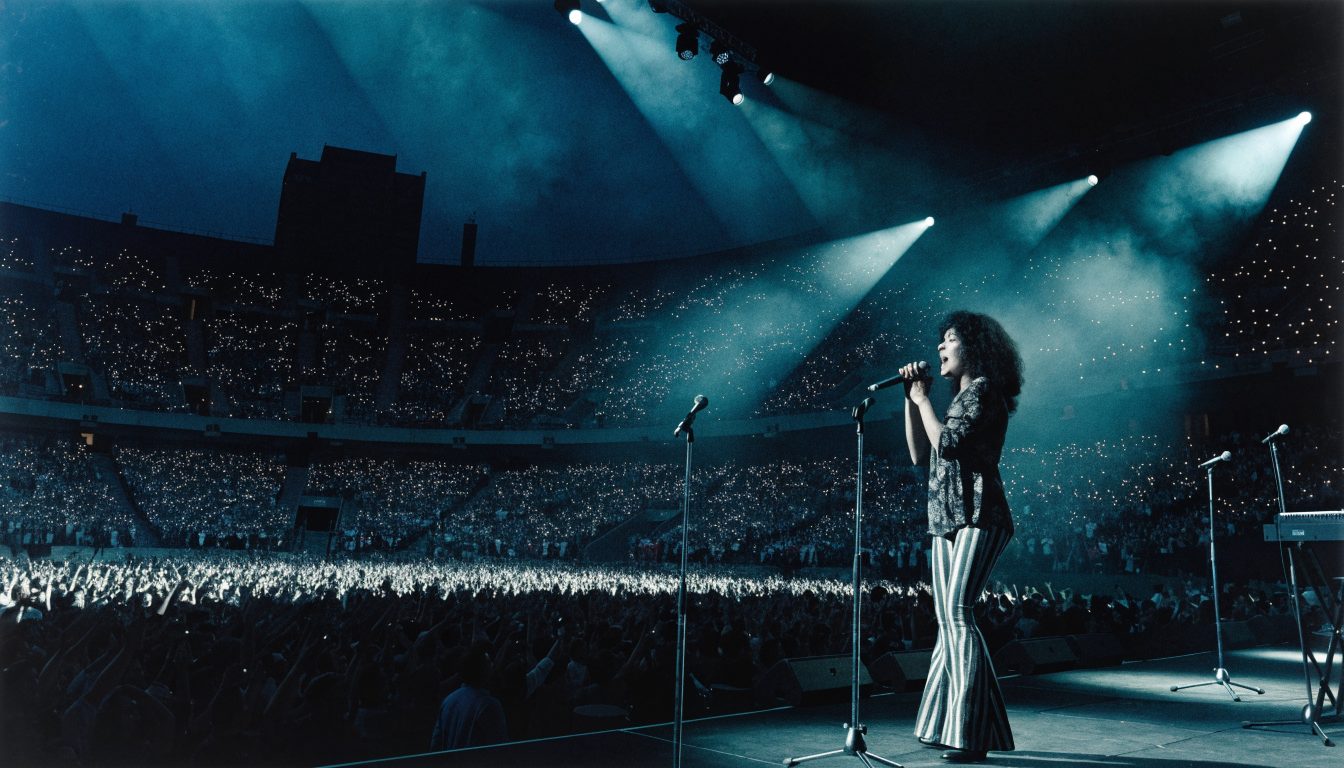
Me and Bobby McGee was written by Kris Kristofferson and Fred Foster. Janis Joplin recorded her version in the fall of 1970 for the album Pearl. She died that October. Columbia released it as a single on January 12, 1971. It reached number one on the Billboard Hot 100 on March 20, 1971. It held the top spot for two weeks. It was the only number one single of her career.
Fred Foster ran Monument Records and produced records in Nashville. His friend, the songwriter Boudleaux Bryant, liked to joke that Foster only came by Bryant's offices to see the secretary, Barbara McKee, known as Bobbie. Fred Foster turned the joke into a title and handed it to Kristofferson, then a young writer on his roster. Kristofferson did not like writing to order, but he took the job. He misheard the surname as McGee. Fred Foster shares the writing credit. The title was his idea.
Kristofferson later said the mood he was after came from the end of Federico Fellini's film La Strada. In that final scene, Anthony Quinn's character, drunk and ruined, lies on a beach at night and sobs after realizing what he has lost.
Several singers recorded it before Joplin did. Roger Miller cut the first version in May 1969. It climbed to number 12 on the US country chart and number 3 on the Canadian country chart. Kenny Rogers and the First Edition put it on their 1969 album Ruby, Don't Take Your Love to Town. Gordon Lightfoot recorded it in November 1969. His single topped the Canadian country chart in 1970 and reached number 13 on the Canadian pop chart. The Statler Brothers included it on an album that same year. Kristofferson sang it himself on his 1970 debut album, Kristofferson.
The singer Bob Neuwirth taught the song to Joplin while Kristofferson was away in Peru, acting in Dennis Hopper's film The Last Movie. She brought it into the sessions for Pearl at Sunset Sound in Hollywood. Her producer was Paul A. Rothchild, best known for his records with the Doors. Her new group was the Full Tilt Boogie Band. Pearl was the only album she made with that band. On Me and Bobby McGee, Joplin played acoustic guitar herself, with Richard Bell on piano, Ken Pearson on organ, John Till on electric guitar, Brad Campbell on bass and Clark Pierson on drums.
Miller, Lightfoot and the Statler Brothers had all treated it as a country song. Joplin's version was a rock record cut by a rock band. It reached a far larger audience than any of the earlier ones. The trade magazine Record World called it a perfect match of singer and material.
Joplin died of a heroin overdose at a Los Angeles hotel in October 1970, before Pearl was finished and before the single came out. One track on the album, Buried Alive in the Blues, came out as an instrumental. She had not yet recorded her vocal for it. Kristofferson first heard her recording of his song the day after she died. He had not known she recorded it. He later recalled walking all over Los Angeles in tears. For years he found the recording hard to listen to. In 1971 he wrote a song in her memory, Epitaph (Black and Blue).
Pearl came out in January 1971 and spent nine weeks at number one on the Billboard 200. The single followed it to the top of the Hot 100. That made Joplin the second artist in US chart history to score a posthumous number one, after Otis Redding with (Sittin' On) The Dock of the Bay. The record also reached number one in Australia, number 6 in Canada and number 10 in New Zealand. Billboard ranked it the eleventh biggest song of 1971. It has since been certified platinum in the US.
Kristofferson told Uncut in 2016 that Joplin's success with the song changed everything for him. He said everything after it was a blur. He also credited the song with starting his acting career. Dennis Hopper loved it enough to cast him in The Last Movie. Fred Foster had doubted that Joplin could sing anything outside of rock. He said her version proved him wrong. He also said he could not listen to it after her death without breaking down.
Other artists kept recording and performing the song after 1971. Jerry Lee Lewis took his version to number one on the US country chart around the turn of 1972, even though it was released as a B-side. The Grateful Dead played it in concert for years, with Bob Weir singing. Pink performed it at the Kia Forum in Inglewood, California, in January 2025 during FireAid, a benefit for victims of the Southern California wildfires.
Joplin's recording entered the Grammy Hall of Fame in 2002. Rolling Stone placed it at number 148 on its list of the 500 greatest songs of all time. The key and tempo of her version are listed on the Me and Bobby McGee key and BPM page.