Murder on the Dancefloor by Sophie Ellis-Bextor
Murder on the Dancefloor started as a chorus Gregg Alexander made up in 1994 when his car would not start, and it was a hit in 2001 and again in 2024 after Saltburn.
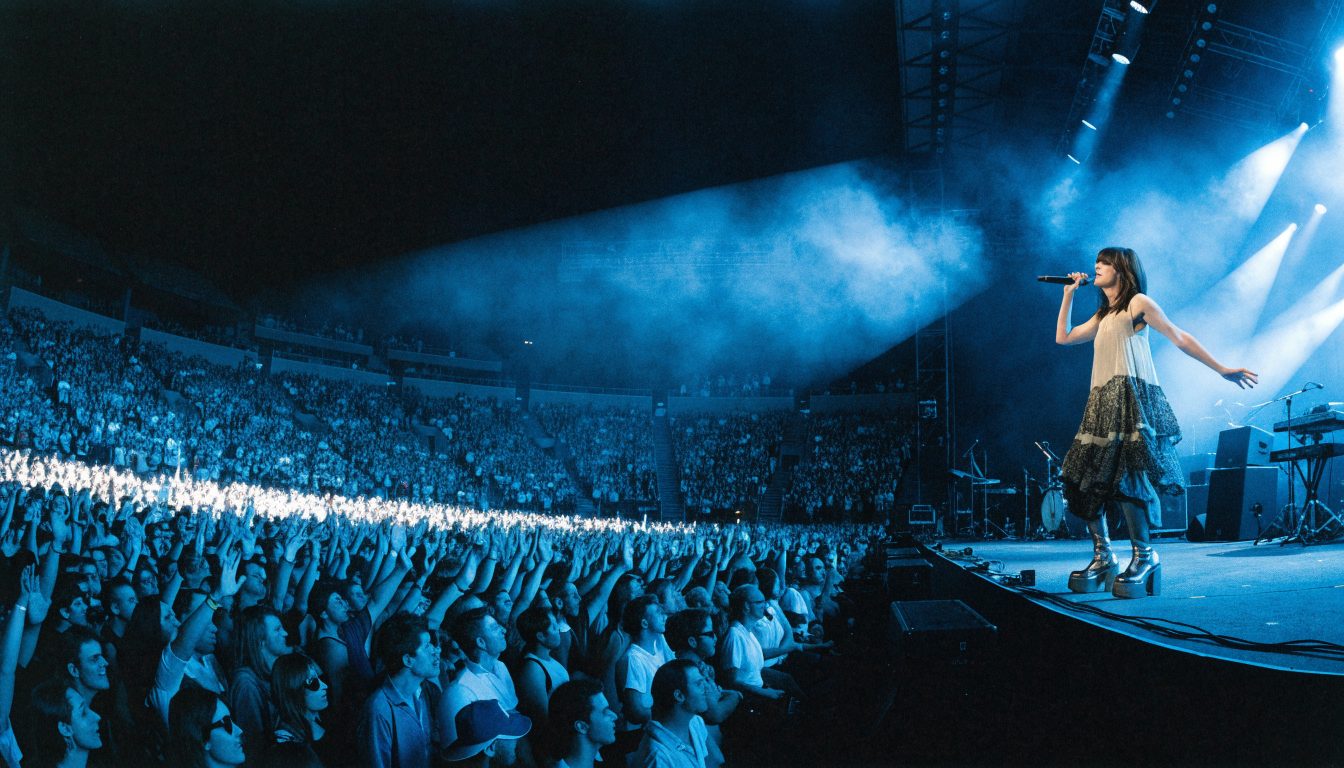
Murder on the Dancefloor is a disco-pop song by Sophie Ellis-Bextor, written with Gregg Alexander of New Radicals and released by Polydor on December 3, 2001, as the second single from her debut album Read My Lips. It reached number two in the UK, went top 10 in many countries, and returned to number two in the UK in January 2024 after the film Saltburn used it in its final scene. The revival also gave Ellis-Bextor her first entry on the US Billboard Hot 100.
The song started with Alexander, years before Ellis-Bextor was involved. In 1994 his Ford Mustang refused to start, which meant he was going to miss a night out at the house clubs in Detroit. There was an acoustic guitar in the back seat, so he picked it up and started singing a chorus about murder on the dancefloor while he taped it on a cassette player. He has since called the words a dummy lyric, something he sang for fun and then found he could not improve on.
Alexander held on to the idea for a few years. In 1998 he weighed it as a possible lead single for Maybe You've Been Brainwashed Too, the only studio album New Radicals made. He went with You Get What You Give instead, and that song became the band's signature hit. He has called Murder on the Dancefloor a monster and You Get What You Give a masterpiece. New Radicals broke up in 1999, and Alexander moved to Notting Hill in London.
At the time Ellis-Bextor was starting over after Mercury Records dropped her indie band theaudience, and in 2000 she sang on Spiller's Groovejet (If This Ain't Love), which went to number one in the UK. Polydor then introduced her to Alexander, who played her his cassette. By her account the chorus was there but the verses were not, so she wrote the rest of the lyrics with him and found the work easy and fun. She has pointed out that the finished song has an unusual shape for a pop single, with two verses and two separate choruses, an A chorus and a B chorus.
Alexander produced the track with Matt Rowe, who was best known then for his work with the Spice Girls. They recorded it at Mayfair Studios in London and mixed it at Townhouse Studios. Session bassist Guy Pratt played the bass line, which Ellis-Bextor has singled out for its melody. Yoad Nevo handled guitars, percussion and programming, John Themis added more guitar, and Wired Strings, led by Rosie Wetters, supplied the strings. Jeremy Wheatley did additional production and the mix.
Sophie Muller directed the music video, which borrowed its setting from the 1969 film They Shoot Horses, Don't They? Ellis-Bextor plays a contestant in a dance marathon who wins by cheating. She trips one rival, pulls the dress off another, spikes the punch, and leaves butter on the floor for someone to slip on. She also takes out the female judge and charms the head judge, played by Colin Stinton, into naming her the winner. She has said the role of a cruel villain was a deliberate step away from the polished, manufactured pop image of the time.
The single peaked at number two in the UK and stayed in the top 40 for 13 weeks. It also reached number two in Ireland, New Zealand and Norway, number three in Denmark and Australia, and number five in Canada. In Australia it spent 20 weeks in the top 50 and ended up as the 12th biggest single of 2002. It was the most played song in Europe that year, and it took Ellis-Bextor on tours through South America, Australia and Southeast Asia. In the US it charted only on the dance singles sales chart, where it reached number nine.
The song stayed a staple of her live shows for two decades. In 2019 she re-recorded it with an orchestral arrangement for her compilation The Song Diaries, with castanets added at Ed Harcourt's suggestion and stomps and handclaps from David Arnold.
Emerald Fennell used the song in the last scene of her 2023 film Saltburn, where Barry Keoghan's character, Oliver Quick, dances naked through the empty country house to Murder on the Dancefloor. Fennell shot the dance 11 times to get the joy she wanted from it. Ellis-Bextor had approved the license based on a short synopsis and only understood the scene when she watched the film. She later called the revival really magical, and said of the song that she had been singing it for more than 20 years and still loved singing it.
The song re-entered the UK dance chart at number one and climbed back to number two on the UK Singles Chart, her first UK top 10 since 2007. It entered the Billboard Hot 100 at number 98 in January 2024 and rose to number 51, and it reached number 10 on the Billboard Global 200. It finished 2024 as the 16th biggest song of the year in the UK, and it now holds platinum certifications in the US, the UK, Australia, New Zealand and Canada, among others. Song IQ lists the key and BPM of Murder on the Dancefloor.
The revival brought new versions as well. Royel Otis covered it on Triple J's Like a Version in February 2024, and their take went platinum in Australia. PNAU and David Guetta released remixes. In August 2024 New Radicals put out their own recording, the band's first single since 1999, and Alexander's original demo went up on streaming services under the group's name. He said the release was meant to encourage people to vote, and made clear it was not a reunion.