Bohemian Rhapsody by Queen
Queen recorded Bohemian Rhapsody across five studios in 1975, with close to 200 tracks of vocal overdubs in the opera section.
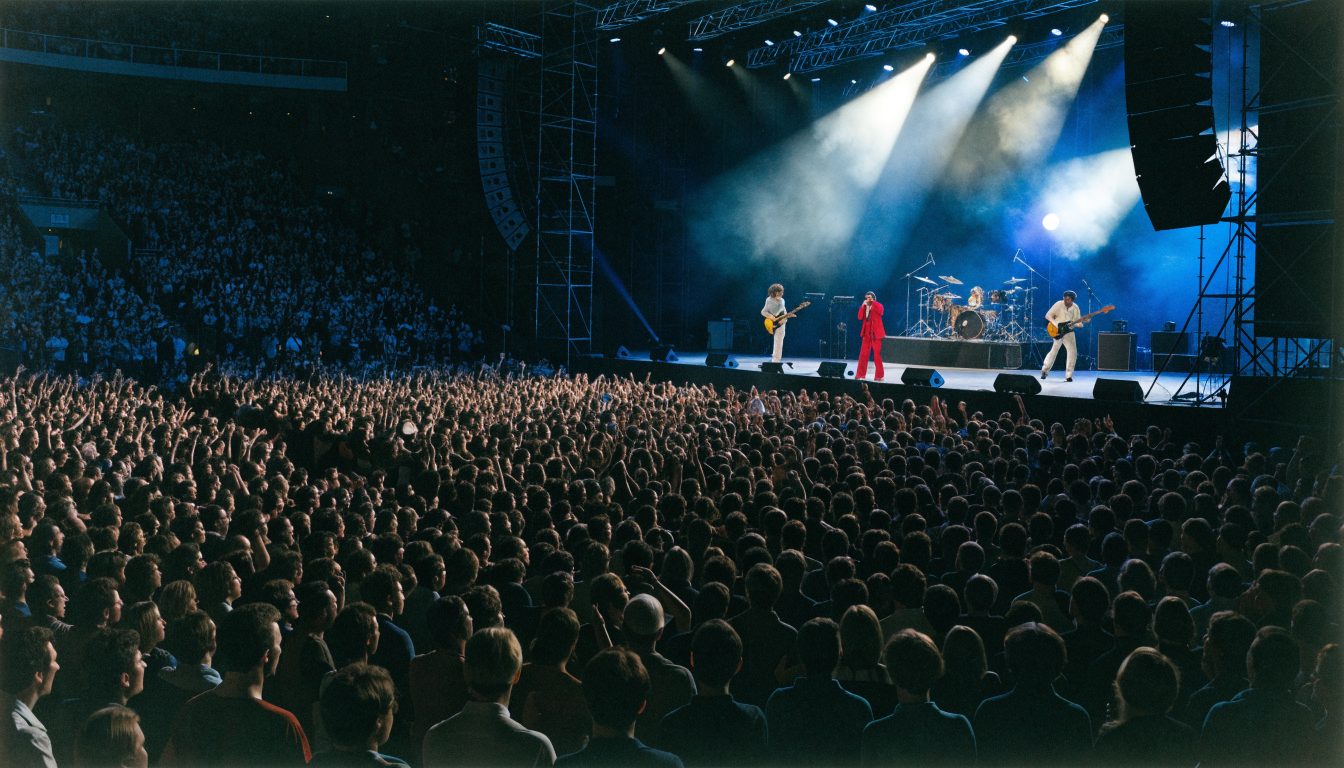
Bohemian Rhapsody is a six-minute song written by Freddie Mercury and recorded by Queen in the late summer of 1975. EMI released it on October 31, 1975, as the lead single from the album A Night at the Opera. It spent nine weeks at number one in the UK. It reached number nine in the US. It topped the UK chart again in 1991, after Mercury's death.
Parts of the song date from the late 1960s. At that time Mercury was trying out fragments of songs on the piano. Chris Smith, who played keyboards in the band Smile, later recalled one of them. Smith knew it as The Cowboy Song. It already carried the line about Mama and a man who had just been killed. Mercury described the finished track as a mock opera. He said he had built it out of three separate songs. Roy Thomas Baker, who produced the record with the band, remembered hearing Mercury play the opening ballad at the piano in his flat. Mercury stopped partway through and announced that the opera section came in at that point. Then the two of them left for dinner.
Brian May has said that Queen often worked out material in the studio. Mercury had the arrangement for this song worked out before the band played any of it. Queen rehearsed for about a month at Ridge Farm Studio in Surrey in the middle of 1975. Recording started on August 24 at Rockfield Studio 1, near Monmouth in South Wales. The sessions moved through four more studios before the end of September.
Studios at the time offered 24 tracks of tape. The choir Mercury wanted needed far more than that. Mercury, May and Roger Taylor sang their parts again and again. Each batch of voices was mixed down to make room for the next. The tape went through eight generations of this bouncing. The overdubs added up to close to 200 tracks. May later said the tape ran through the machines so often that it kept wearing out. The three singers split the range between them. Taylor said May could get down quite low, Mercury had a powerful middle, and Taylor handled the high parts. His falsetto carries the top notes, including the long one that closes the opera section.
May recorded the guitar solo between the ballad and the opera on one track with no overdubs. He has said he wanted to write a small tune that worked as a counterpart to the main melody, rather than repeat the melody itself. The lyrics also name Galileo. May studied astronomy. He earned a PhD in astrophysics in 2007.
EMI doubted the song could work on the radio at nearly six minutes. Mercury gave a copy to his friend Kenny Everett, a DJ at Capital Radio in London. Everett had been handed the tape on the understanding that he would not play it. He played pieces of it on air. Over the next two days he played the full track 14 times. The single entered the Official UK Singles Chart at number 47 on November 8, 1975. It reached the top within about four weeks and stayed there for nine weeks. It was the Christmas number one that year. It was also Queen's first UK number one.
Bruce Gowers directed the promotional film in a few hours at Elstree Studios, where Queen were rehearsing for a tour. It opens on the four band members' faces lit from above. The clip came out six years before MTV launched.
In the United States the single came out in December 1975. It peaked at number nine on the Billboard Hot 100. It was nominated for two Grammy Awards in 1977, for best pop vocal performance by a group and best arrangement for voices.
Mercury died on November 24, 1991. Within weeks, Bohemian Rhapsody was reissued in the UK as a double A-side with These Are the Days of Our Lives. It went back to number one on December 21, 1991, and held the top spot for five weeks. The proceeds went to the Terrence Higgins Trust. It remains the only single to be the UK Christmas number one twice in the same version.
The 1992 comedy Wayne's World brought it back in America. In one scene, Mike Myers, Dana Carvey and friends headbang in a car to the hard rock section of the song. Queen's US label reissued it in January 1992 on a cassette single with The Show Must Go On. Proceeds went to the Magic Johnson Foundation for AIDS research. This time it climbed to number two on the Hot 100, behind Jump by Kris Kross. It stayed on the chart for 17 weeks. The Wayne's World soundtrack spent two weeks at number one on the US album chart.
At the Freddie Mercury Tribute Concert at Wembley Stadium in 1992, Elton John and Axl Rose sang it with the surviving members of Queen. Weird Al Yankovic folded it into a polka medley called Bohemian Polka on his 1993 album Alapalooza. The Muppets made their own video of it in 2009. Panic! at the Disco worked it into their live sets on several tours. For the song's 50th anniversary in 2025, Queen and the Mercury Phoenix Trust approved its first official translation, a version sung in Zulu by a choir.
The song entered the Grammy Hall of Fame in 2004. When the Bohemian Rhapsody biopic opened in 2018, the track returned to the Hot 100 a third time. That December, Universal Music Group said it had passed 1.6 billion streams across the major services. Universal called it the most streamed song of the 20th century. By September 2025 it had passed 2.8 billion plays on Spotify alone. Its key and tempo shift several times across the ballad, opera and rock sections. They are broken down on the Song IQ page for Bohemian Rhapsody.