Lola by The Kinks
Lola, a 1970 single by The Kinks written by Ray Davies, reached number two in Britain and number nine in the US.
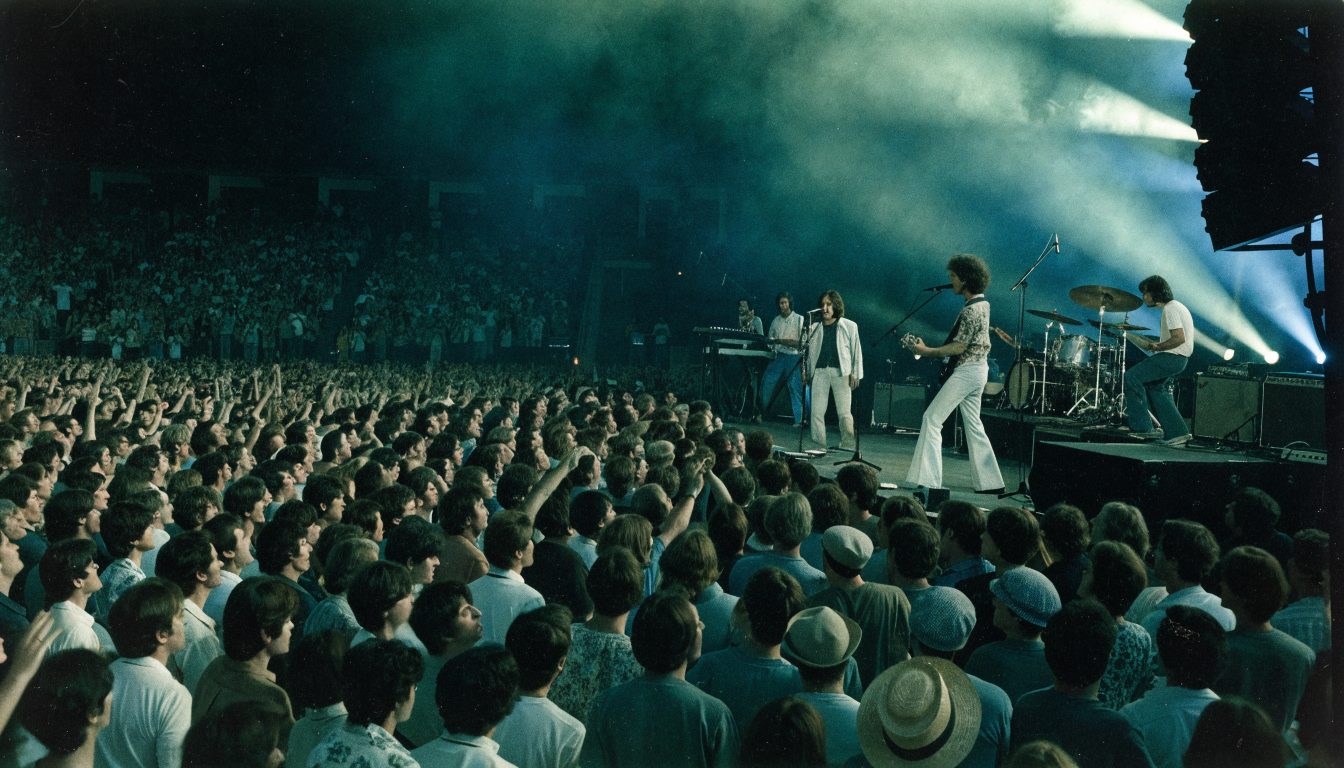
Lola is a 1970 single by The Kinks, written by Ray Davies and recorded at Morgan Studios in Willesden, London, over April and May of that year. It was released in Britain on June 12, 1970. It reached number two on the UK chart and number nine on the Billboard Hot 100. It went to number one in the Netherlands, Ireland, New Zealand and South Africa.
Davies finished it soon after taking time away from music to act in The Long Distance Piano Player, a film made for the BBC's Play for Today series. He has said he wanted a record that would sell in its first five seconds. The opening was the part that gave him trouble. The verses and the chorus arrived far more easily. His one year old daughter picked up the chorus and sang it as she crawled across the floor. That gave him confidence in it.
Davies went into a store on Shaftesbury Avenue for a Martin acoustic guitar. He also bought a 1938 Dobro resonator guitar there for £150. On the record he played the two together, with heavy compression on both. The chord pattern from those two guitars opens the track. Dave Davies has described the riff as his own idea, worked out in his brother's front room, starting on an E and moving to an A with the open E string left ringing through the change.
The sessions ran long. The Kinks tried four or five arrangements in April, each with a different start and a different feel. Bassist John Dalton later recalled how long the sessions dragged on. In May, John Gosling, a pianist the band had only just auditioned, put baby grand piano parts on the backing track. The vocals were finished the same month. The final lineup on the record was Ray Davies on lead vocal and acoustic and resonator guitars, Dave Davies on electric guitar and backing vocal, Dalton on bass and Mick Avory on drums, with road manager Ken Jones shaking the maracas.
The song tells of a young man who meets Lola in a club in Soho and dances with her through the night. Over the course of the song he realizes that Lola may have been born male. Band members give different accounts of where the idea came from. Ray Davies credited the band's manager, Robert Wace, who had spent an evening in Paris dancing with a partner who turned out to be a cross dresser. Avory pointed instead to a London friend named Michael McGrath, who had taken him to drag shows and private clubs in the west of the city. Ray Davies has said the story drew on something real, though not every line of it. He denied the rumor that it was about a date with Candy Darling. He also told Record Mirror that Lola's sex did not really matter.
One line originally compared champagne to Coca-Cola. The BBC did not allow brand names on air. The Kinks were on tour in the United States and the master tapes were in England. Davies left after a show in Minnesota to fix the line, could not get a performance he liked, and went back for a show in Chicago. On June 3, 1970, he flew to London again and sang the word as cherry cola. The BBC accepted that version. He has maintained that the original line was true to life. He once explained that he had tasted a California sparkling wine that really did taste like cola. The next single, Apeman, needed a similar last minute trip when censors decided one word sounded too much like a curse.
Some British broadcasters faded the record out before the final verse. In November 1970 several Australian stations dropped it over its subject. Some of them later played an edited version. The single reached the top five in Germany, Belgium, Austria, Switzerland and Sweden, number two in Canada, and number six in Australia. In the US it came out on Reprise on June 28, backed with Mindless Child of Motherhood. The British pressing on Pye carried Berkeley Mews on the flip side.
Lola gave the band financial comfort and creative control. It also named the album that followed in November 1970, Lola Versus Powerman and the Moneygoround, Part One. That album is a set of songs about the music business. It peaked at number 35. The key and tempo of Lola are listed on its Song IQ page.
The song stayed in the band's live shows for decades. A version recorded in Providence, Rhode Island, in 1979 appeared on the live album One for the Road. It came out as a single in 1980 and went to number one in the Netherlands and Belgium. Earlier live takes appear on Everybody's in Show-Biz from 1972, and a later one is on To the Bone from 1996. Ray Davies brought the character back in Destroyer, a 1981 track.
Other artists have covered it. The Raincoats recorded it in 1979, Andy Taylor made it a single in 1990, and Madness put it on The Dangermen Sessions, Volume One in 2005. Robbie Williams cut a version in 2007 for a BBC Radio 1 compilation, Ray Davies sang it with Paloma Faith in 2010, and Weird Al Yankovic turned it into Yoda in 1985. Rolling Stone placed the original at number 422 on its 2004 list of the greatest songs of all time and at number 386 in the 2021 revision. The record is now certified platinum in the UK.