Lido Shuffle by Boz Scaggs
Boz Scaggs built Lido Shuffle, the last hit from Silk Degrees, on a Fats Domino shuffle beat and recorded it with the session players who soon formed Toto.
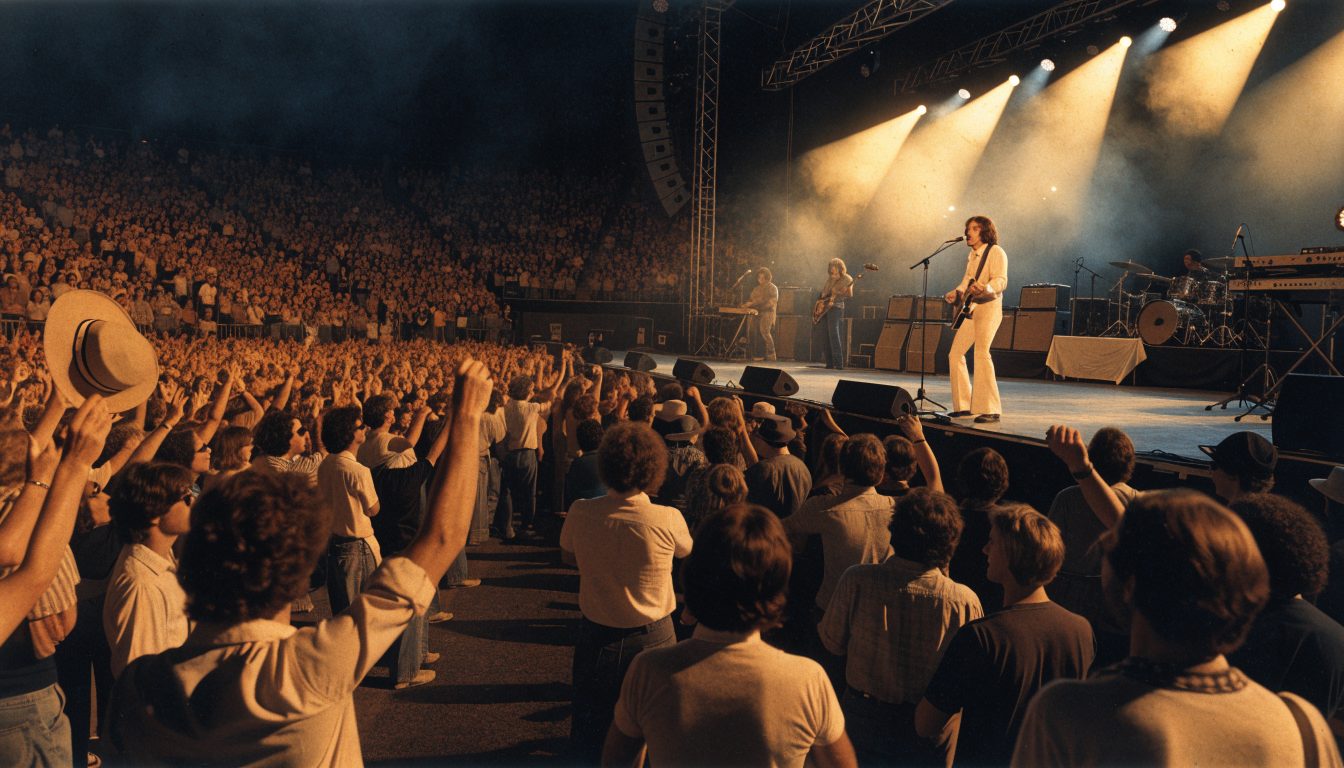
Lido Shuffle is a song by Boz Scaggs, written with keyboardist David Paich and first released on Scaggs's 1976 album Silk Degrees. It came out as the album's fourth single in February 1977, and it reached number 11 on the Billboard Hot 100, number 13 in the UK and number 2 in Australia. The musicians who played on it, Paich, drummer Jeff Porcaro and bassist David Hungate, went on to form Toto.
The song was recorded in September 1975, months before Silk Degrees came out, with Joe Wissert producing. Scaggs had put the session band together himself, asking around for recommendations before settling on his players. Paich handled acoustic piano, Hammond organ and the Moog synthesizers. Hungate played bass and Porcaro played drums, while Fred Tackett and Louis Shelton added guitar next to Scaggs, who sang and played guitar as well. A large horn section filled out the arrangement, with Tom Scott, Plas Johnson, Bud Shank, Jim Horn and Vincent DeRosa among the names in the credits.
The song grew out of Scaggs playing The Fat Man, Fats Domino's early rhythm and blues hit, on the piano, and he loved its driving shuffle beat. He told Songfacts in 2013 that Lido was something he had been banging around for a while. He was careful to say he borrowed nothing from Domino except the feel: "I just took the idea of the shuffle." He started singing a melody over that rolling rhythm, then took the rough idea to Paich, who helped him fill it out into a finished song. The two of them wrote most of Silk Degrees together, including Lowdown.
The lyrics loosely sketch a drifter chasing a big score. Porcaro's heavy shuffle, the horn section and Paich's synthesizer lines carry the track, which runs three minutes and 43 seconds.
The first single from Silk Degrees was It's Over in the spring of 1976, followed by Lowdown, which became the album's biggest hit and won the Grammy for Best R&B Song. The album reached number 2 on the Billboard 200, stayed on that chart for 115 weeks and was eventually certified five times platinum in the United States. It remains the best-selling record of Scaggs's career. Lido Shuffle came out nearly a year after the album.
In America, Lido Shuffle peaked at number 11 on the Hot 100 in May 1977 and climbed to number 6 on the Cash Box chart. It went to number 5 in Canada and number 18 in New Zealand. Its best showing was in Australia, where it was paired with What Can I Say as a double A-side and spent three weeks at number 2 on the Kent Music Report, finishing as the 12th biggest single of the year in that country. Years later, with streaming counted, the song was certified platinum by the RIAA in the United States and by the RMNZ in New Zealand. Its key and tempo set a quick, swinging groove for dancing.
Paich, Porcaro and Hungate were busy Los Angeles session players in 1975. Toto formed soon after Silk Degrees, with Paich as a main songwriter and keyboardist and Porcaro on drums, and Scaggs has credited the album with helping bring the band together. Their first album came out in 1978, and within a few years they had hits of their own with Hold the Line, Rosanna and Africa.
In 1978 the song was picked for the soundtrack of FM, a film about a Los Angeles rock station, where it sat beside songs by Steely Dan, the Eagles, Linda Ronstadt, Boston and Queen. The double album gathered many of the biggest radio songs of the late 1970s, and Lido Shuffle was the only Scaggs track on it.
In the 2000s the Philadelphia Eagles played Lido Shuffle whenever cornerback Lito Sheppard intercepted a pass, a pun on his first name.
In 2010 Scaggs joined Donald Fagen and Michael McDonald in a touring group called the Dukes of September, and Lido Shuffle became part of their sets, with a live recording released in 2014. The vocal group Straight No Chaser and the hard rock band Jetboy have recorded covers.
The B-side of the American single was We're All Alone, another Silk Degrees track that Rita Coolidge turned into a top 10 hit later in 1977.