The Things We Do for Love by 10cc
The Things We Do for Love is a 1976 single by 10cc, written by Eric Stewart and Graham Gouldman and recorded after Kevin Godley and Lol Creme left the band, and it became the group's best-selling single.
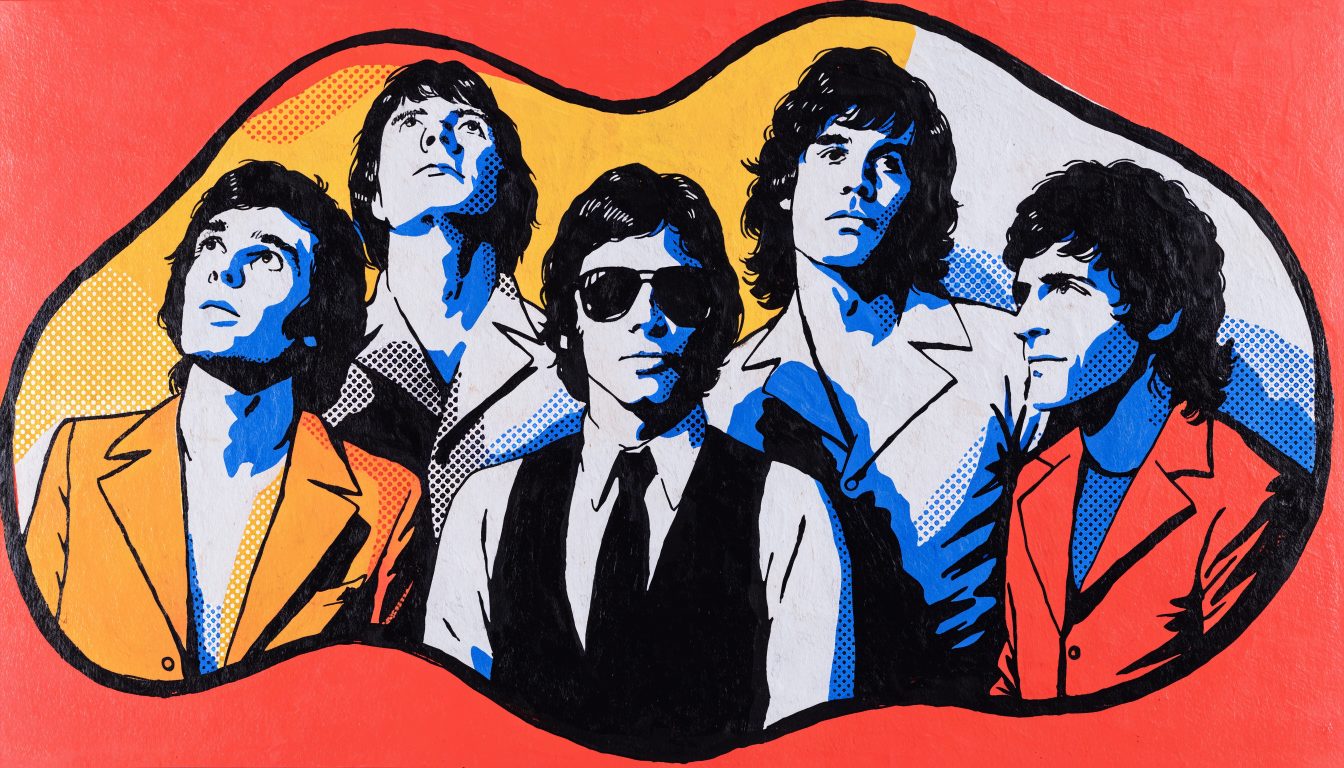
The Things We Do for Love is a 1976 single by the English band 10cc, written by Eric Stewart and Graham Gouldman. It came out in the UK on December 3, 1976, on Mercury Records, as the first release after Kevin Godley and Lol Creme left the group. It reached No. 6 in the UK, No. 5 on the Billboard Hot 100 and No. 1 in Canada, and it became the band's best-selling single.
The song dates back to the sessions for How Dare You!, the band's fourth album, released in 1976. At that point 10cc was still a four-piece, and the two halves of the band were drifting apart. Stewart and Gouldman leaned toward tight, melodic pop. Godley and Creme were more interested in experiments, including the Gizmo, a guitar device they had invented and would build their 1977 album Consequences around. Godley and Creme disliked the new song when Stewart played it to them, and Stewart later recalled Godley saying, "I don't want to do any more crap like this." The track was shelved and did not make How Dare You!.
Godley and Creme soon quit to work as a duo, and Stewart and Gouldman kept the 10cc name and picked the song back up. Stewart sang lead and backing vocals and played lead electric guitar, piano and organ. Gouldman played bass, electric and acoustic rhythm guitars and tambourine, added handclaps and sang backing vocals. Paul Burgess, who had been playing drums with the band on tour, handled drums, tambourine, handclaps and a gong. The production credit went to 10cc as a whole. The work was done at Strawberry Studios South in Dorking, the second studio Stewart and Gouldman opened after the original Strawberry Studios in Stockport, the room where the four members had been writing and recording together since 1968.
Gouldman has said that Stewart's first idea was to make the song about a suicide. Gouldman told him it was not a good idea, since the music sounded far too bright for that subject, and Stewart agreed. Stewart came up with the title, and the lyric moved toward his own past instead. As a young man in Manchester he had no telephone at home. In a BBC Radio Wales interview he said, "I had to go and find a phone box to ring the girl who was about to become my wife." That memory turned into the narrator of the song, who finds the phone lines down and walks through rain and snow to make a call.
The lyric is about the effort and compromise that love takes. Musically the song has a light, layered sound, with stacked harmonies over a bright piano and guitar arrangement. Gouldman once described the chords as sort of light blue, and pointed out that the song opens in a minor key before moving into major. He called it a very multi-colored song.
The trade press liked it on release. Record World praised it as a well-crafted tune with a crisp pop sound. Cash Box heard a strong Beatles influence mixed with solid rock and roll and the rich harmonies listeners knew from the band's earlier records.
Beyond its peaks in the UK, the US and Canada, the single reached No. 2 in Ireland, No. 5 in Australia, No. 13 in the Netherlands and No. 27 in New Zealand. In the US it climbed to No. 4 on the Cash Box Top 100 and No. 12 on the Billboard Adult Contemporary chart, and it spent 19 weeks on the Hot 100. The RIAA certified it gold, and in New Zealand it was later certified platinum. It finished 1977 at No. 44 on the Billboard year-end chart and No. 12 on the Canadian year-end list. It is also the only 10cc song that charted higher in the US than in the UK.
The single led into Deceptive Bends, the band's fifth studio album, released in 1977. It became one of the five UK top ten albums the group placed between 1974 and 1978. For the next stage of touring, Burgess stayed on and guitarist Rick Fenn joined the lineup.
Amy Grant recorded the song for the soundtrack of the 1996 film Mr. Wrong, and her version reached No. 24 on the US Adult Contemporary chart and No. 8 on the Canadian Adult Contemporary chart. In 2007 the American band Lazlo Bane included it on Guilty Pleasures, an album of 1970s covers. Tina Arena released her own version in November 2014, with proceeds going to the National Breast Cancer Foundation in Australia, and the department store David Jones used it in its Christmas campaign that year.
The song's key and tempo are listed on the Song IQ page for The Things We Do for Love.